Within Pressure
Why pressure makes first answers feel final
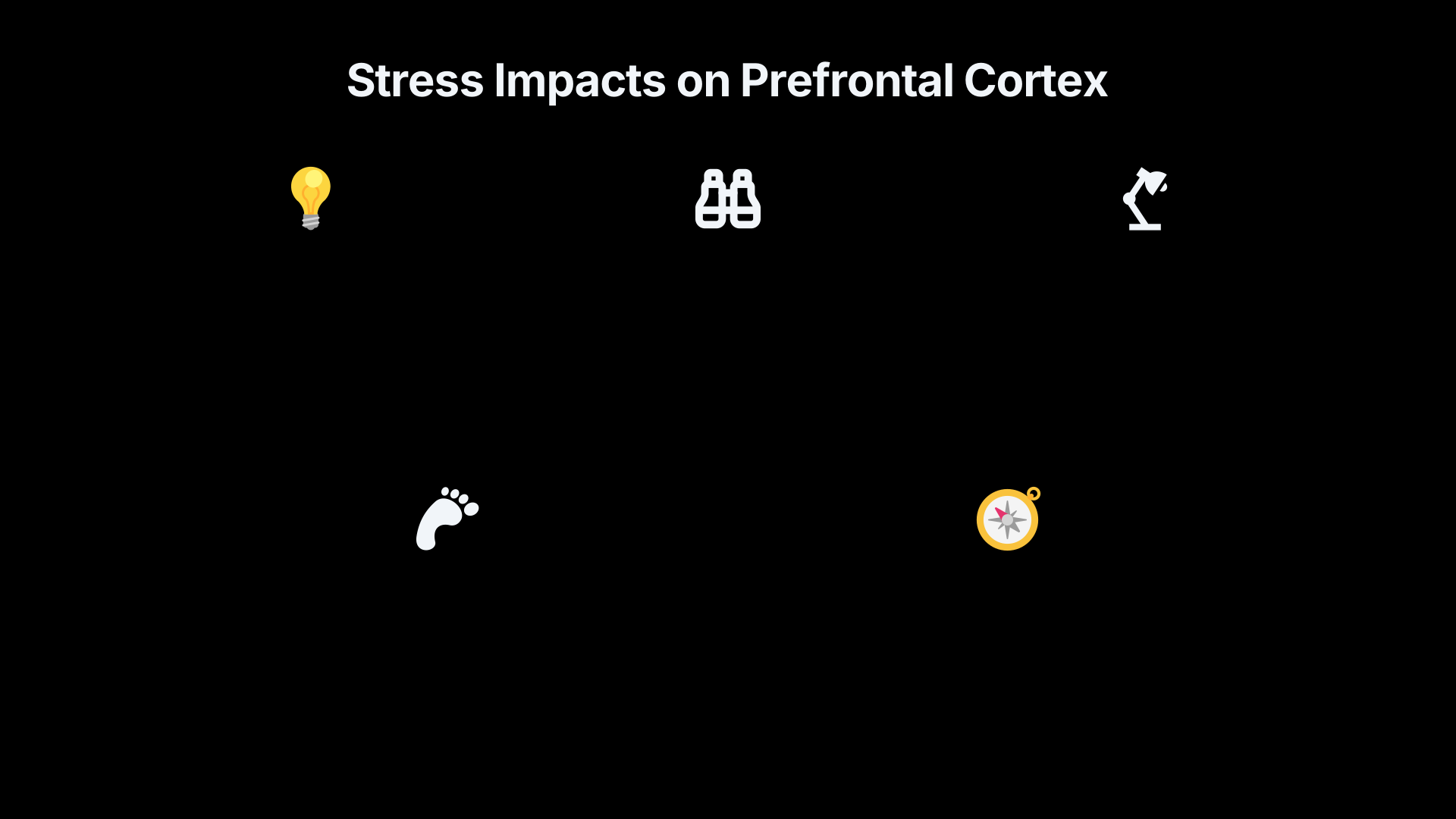
Stress can shrink the mental space needed to compare explanations, delay closure, and notice contradictions.
On this page
- What stress does to working memory and cognitive control
- Why threat favours defence, habit, and quick closure
- Practical pauses that restore room for analysis
Page outline Jump by section
Introduction
When people are under threat or intense pressure, reasoning does not usually fail because intelligence disappears. It becomes harder because the mental systems that support flexible thinking are diverted towards immediate survival. The result is a narrower field of attention, reduced ability to hold several possibilities in mind at once, and a stronger urge to settle quickly on the first explanation that seems to fit. This is why stress often makes initial judgements feel unusually certain, even when the available evidence is incomplete.
 For anyone trying to improve analytical thinking, the practical lesson is not that emotions must be eliminated. Rather, it is to recognise when stress has reduced the mental space needed to compare alternatives, notice contradictions, and revise an early conclusion. Research from cognitive psychology, neuroscience and stress physiology consistently shows that acute stress weakens working memory and cognitive flexibility—the executive functions that make careful reasoning possible.[PMC+2PMC]pmc.ncbi.nlm.nih.govPMCThe Effects of Acute Stress on Core Executive Functionsby GS Shields · 2016 · Cited by 1254 — We found that stress impaired working memory and cognitive flexibility, whereas it had nuanced…
What stress does to working memory and cognitive control
Flexible reasoning depends heavily on working memory: the limited mental workspace used to hold information temporarily while comparing explanations, testing assumptions and following chains of logic. When this workspace shrinks, thinking becomes less exploratory and more linear.
Acute stress changes how the brain allocates its resources. Elevated stress hormones and increased release of neurotransmitters such as noradrenaline and dopamine help prepare the body for rapid action, but they also reduce the efficiency of prefrontal cortex networks that normally support planning, working memory and cognitive control. Instead of carefully coordinating competing ideas, the brain becomes more likely to rely on simpler, well-established responses.[PMC+2PubMed]pmc.ncbi.nlm.nih.govPMCStress signalling pathways that impair prefrontal cortexby AFT Arnsten · 2009 · Cited by 4959 — The Review first describes how exposure to even mild uncontrollable stress can rapidly impair…
Large reviews of experimental studies find that acute stress reliably impairs two executive functions that matter directly for reasoning:
- Working memory, making it harder to keep multiple pieces of evidence active simultaneously.
- Cognitive flexibility, reducing the ability to switch perspectives, update beliefs or abandon an unsuccessful strategy.
The effects on inhibition are more mixed, suggesting that stress does not simply make people impulsive. Rather, it changes which forms of control are preserved and which are weakened.[PMC]pmc.ncbi.nlm.nih.govPMCThe Effects of Acute Stress on Core Executive Functionsby GS Shields · 2016 · Cited by 1254 — We found that stress impaired working memory and cognitive flexibility, whereas it had nuanced…
This explains a common experience during high-pressure discussions. A person may genuinely struggle to remember qualifying information, alternative explanations or earlier uncertainties—not because they have disappeared, but because the cognitive workspace needed to manipulate them has become overloaded.
Why pressure makes first answers feel final
Stress changes not only how much information can be processed, but also what the brain treats as worth processing.
Under threat, uncertainty itself becomes uncomfortable. Continuing to compare competing explanations consumes mental resources at precisely the moment when the brain is prioritising rapid action. Closing the question quickly often feels safer than remaining undecided.
Several mechanisms reinforce this tendency.
Attention narrows. Threat increases focus on information that appears immediately relevant to the perceived danger, while peripheral details receive less processing. This can improve reaction speed in emergencies but reduces the chance of noticing evidence that challenges an initial interpretation.[Nature]nature.comNeurocognitive effects of stress: a metaparadigm perspectiveby EJ Kim · 2023 · Cited by 161 — Stress has been found to impair learn…
Habit becomes more attractive. When executive control weakens, previously learned routines and familiar explanations become easier to retrieve than careful analysis. Existing beliefs therefore feel more compelling under stress, even if they are not objectively better supported.[PMC]pmc.ncbi.nlm.nih.govPrefrontal cortex executive processes affected by stress in…by M Girotti · 2017 · Cited by 262 — We will review the effects of stre…
Updating becomes harder. Flexible thinking requires replacing an old interpretation with a better one. Stress reduces this capacity, increasing perseveration—the tendency to continue applying the same strategy despite evidence that it is no longer appropriate.[Nature]nature.comEven though an individual's perception of their chronic…Read more…
Together these effects help explain why people under pressure often become more certain before they become more accurate.
Why threat favours defence, habit and quick closure
Not all stressful situations have the same psychological meaning. A deadline, physical danger, public criticism and an attack on personal identity all activate overlapping but not identical responses.
When a situation is interpreted as threatening, defensive goals begin to compete with truth-seeking goals. Cognitive resources increasingly support questions such as:
- How do I protect myself?
- Who is responsible?
- What action should I take immediately?
- Which explanation reduces uncertainty fastest?
These questions are often adaptive during genuine emergencies. If a cyclist swerves into traffic, hesitation is dangerous. Quick pattern recognition and habitual responses save time.
The problem arises when the same threat-oriented mode is activated during tasks that require careful analysis rather than immediate action. Complex policy debates, scientific questions, workplace disagreements or personal conflicts benefit from sustained uncertainty while evidence is evaluated. Stress biases the mind in the opposite direction.
Research on resilience and executive function suggests that threat states shift cognition towards reliable, well-practised responses while limiting exploration and flexibility. In effect, the brain trades adaptability for speed and predictability.[Frontiers]frontiersin.orgFrontiersMental Resilience and Coping With Stressby IS Palamarchuk · 2021 · Cited by 100 — In other words, “cold” executive functioning i…
Acute and chronic stress do not affect reasoning in the same way
Short bursts of stress and long-term stress deserve separate consideration.
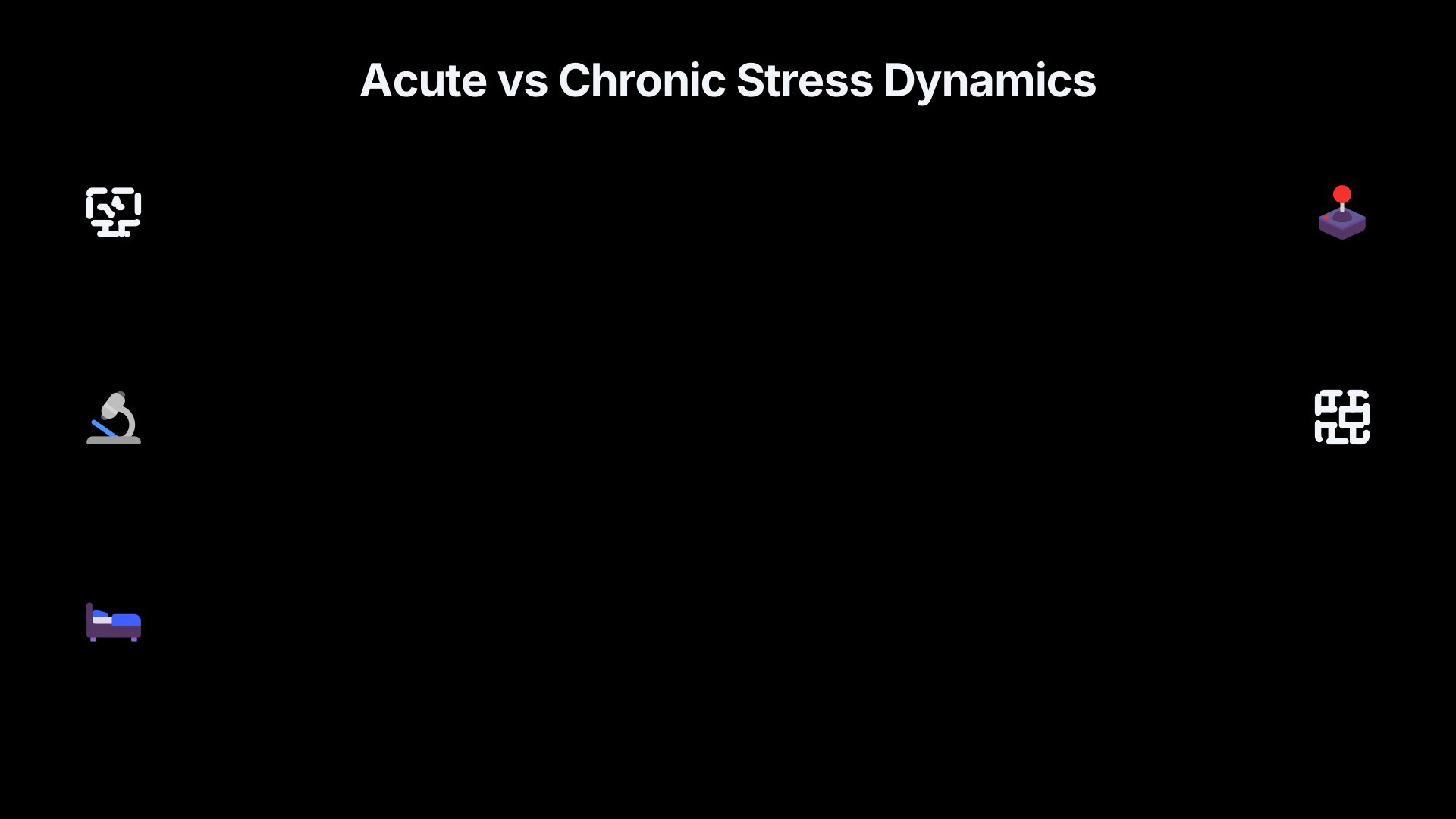
Acute stress produces rapid, often reversible changes in executive function. Once the stress response subsides, cognitive flexibility frequently returns. Laboratory studies occasionally find small improvements in specific tasks—particularly when the stress is manageable, perceived as controllable, or closely matched to the task’s demands. For example, some experiments have reported improved set-shifting under particular conditions, although these effects are not the dominant pattern and diminish when people experience the stressor as uncontrollable.[Taylor & Francis Online]tandfonline.comTaylor & Francis OnlineFull article: Acute stressor effects on cognitive flexibilityby RL Gabrys · 2019 · Cited by 62 — These data indica…
Chronic stress is different. Repeated activation of stress systems is associated with longer-lasting changes in prefrontal cortex function and structure, alongside persistent difficulties with working memory, attention and flexible behaviour. Rather than temporarily narrowing thought, prolonged stress can gradually make rigid thinking more likely across many situations.[PMC+2PMC]pmc.ncbi.nlm.nih.govPMCEffects of chronic stress on cognitive functionby M Girotti · 2024 · Cited by 86 — In this review, we will present an overview of the cognitive domains affected by stress with a spe…
This distinction matters because the best response differs. A momentary pause may help recover from acute pressure, whereas chronic stress often requires broader changes in workload, recovery, sleep and environmental demands before reasoning consistently improves.
Practical pauses that restore room for analysis
The goal is not to eliminate stress before making every decision. That is impossible. Instead, the aim is to restore enough cognitive capacity to make flexible thinking possible again.
Several evidence-informed practices help create that space.
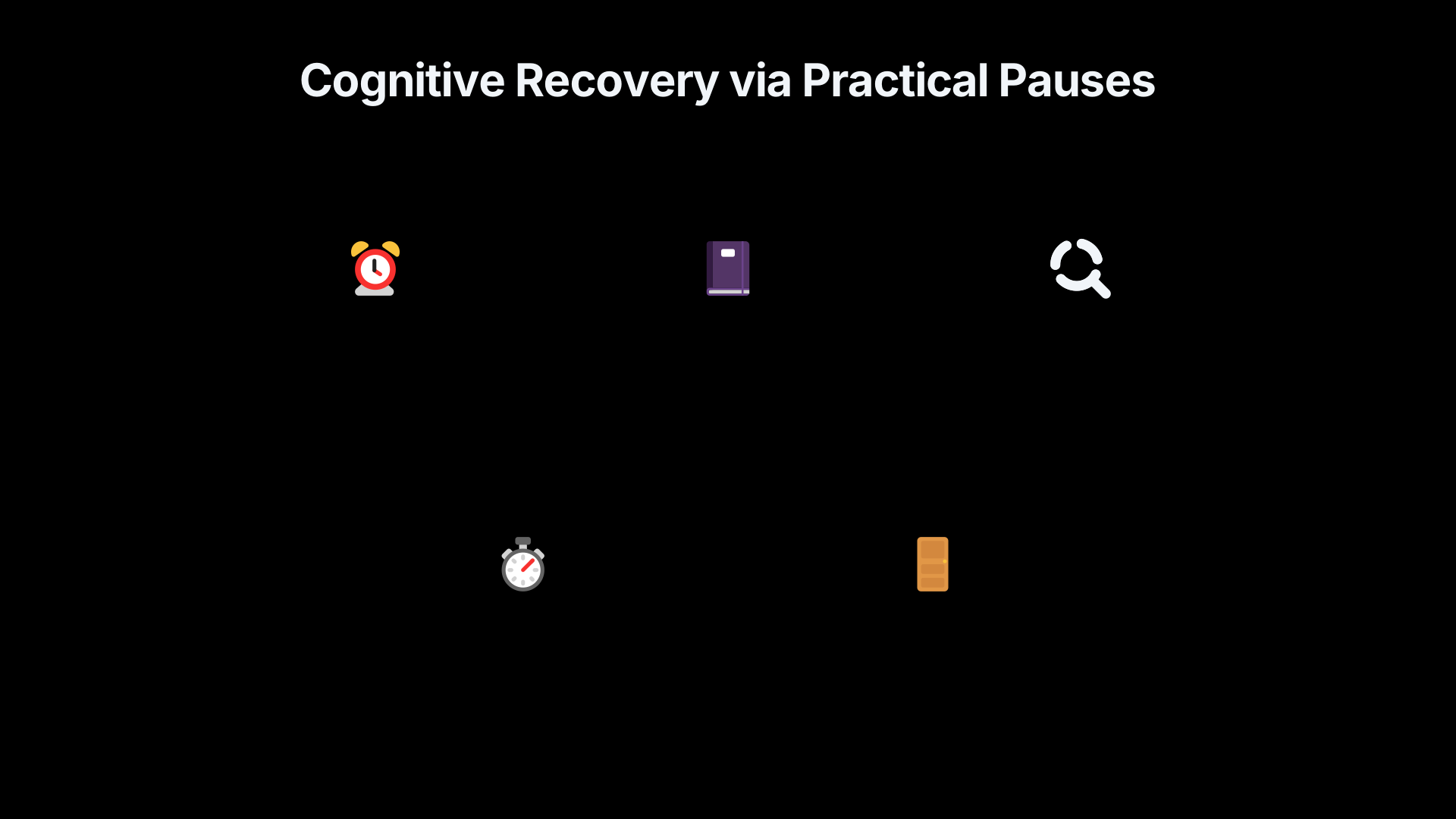
Delay closure when possible. If a decision is not genuinely urgent, postpone commitment until physiological arousal has declined. Even a short break can improve the availability of executive resources.
Externalise working memory. Write down competing explanations instead of trying to hold them mentally. Lists, diagrams or simple comparison tables reduce the burden on working memory and make contradictions easier to detect.
Generate alternatives before evaluating them. Deliberately ask, “What else could explain this?” before deciding which explanation is strongest. Producing alternatives first reduces the tendency to defend the initial interpretation.
Separate evidence from urgency. Feeling pressure does not necessarily mean the evidence supports immediate certainty. Ask whether the deadline comes from the external situation or from the discomfort of remaining uncertain.
Reduce unnecessary threat cues. If possible, move important analytical discussions away from environments that amplify defensiveness, public evaluation or time pressure. The quality of reasoning often improves when people no longer feel they are under attack.
These techniques do not eliminate bias, but they help recreate the conditions under which the prefrontal cortex can compare options, revise assumptions and integrate conflicting information more effectively.
The key insight for analytical thinking
Pressure changes the balance between exploration and action. In situations where immediate survival matters, narrowing attention and relying on familiar responses is often adaptive. In analytical work, however, those same mechanisms reduce the ability to question assumptions, weigh competing explanations and tolerate uncertainty.
Improving reasoning under pressure therefore depends less on becoming perfectly calm than on recognising when stress has made the first answer feel more complete than the evidence actually warrants. Creating even a small amount of additional mental space—through time, external aids or deliberate consideration of alternatives—can restore the flexibility needed for higher-quality judgement.
Amazon book picks
Further Reading
Books and field guides related to Why pressure makes first answers feel final. Use these as the next step if you want deeper reading beyond the article.
The Upside of Stress
Focuses specifically on how stress changes thinking and performance.
The Chimp Paradox
Shows practical ways to manage emotional responses that interfere with thinking.
Emotional Intelligence
Provides context for how emotions shape judgment and self-control.
The Scout Mindset
Encourages flexible reasoning and updating beliefs under uncertainty.
eBay marketplace picks
Marketplace Samples
Example marketplace items related to this page. Use the search link to explore similar finds on eBay.




Endnotes
1.
Source: pmc.ncbi.nlm.nih.gov
Title: PMCThe Effects of Acute Stress on Core Executive Functions
Link:https://pmc.ncbi.nlm.nih.gov/articles/PMC5003767/
Source snippet
by GS Shields · 2016 · Cited by 1254 — We found that stress impaired working memory and cognitive flexibility, whereas it had nuanced...
2.
Source: pmc.ncbi.nlm.nih.gov
Title: PMCStress signalling pathways that impair prefrontal cortex
Link:https://pmc.ncbi.nlm.nih.gov/articles/PMC2907136/
Source snippet
by AFT Arnsten · 2009 · Cited by 4959 — The Review first describes how exposure to even mild uncontrollable stress can rapidly impair...
3.
Source: pmc.ncbi.nlm.nih.gov
Link:https://pmc.ncbi.nlm.nih.gov/articles/PMC5756532/
Source snippet
Prefrontal cortex executive processes affected by stress in...by M Girotti · 2017 · Cited by 262 — We will review the effects of stre...
4.
Source: nature.com
Link:https://www.nature.com/collections/ysncpfjdnj
Source snippet
Nature Reviews Neuroscience Focus on StressStress affects cognition and increases noradrenaline and dopamine levels in the prefrontal cor...
5.
Source: nature.com
Link:https://www.nature.com/articles/s41380-023-01986-4
Source snippet
Neurocognitive effects of stress: a metaparadigm perspectiveby EJ Kim · 2023 · Cited by 161 — Stress has been found to impair learn...
6.
Source: pmc.ncbi.nlm.nih.gov
Title: PMCEffects of chronic stress on cognitive function
Link:https://pmc.ncbi.nlm.nih.gov/articles/PMC11407068/
Source snippet
by M Girotti · 2024 · Cited by 86 — In this review, we will present an overview of the cognitive domains affected by stress with a spe...
7.
Source: nature.com
Link:https://www.nature.com/articles/s41598-021-03101-5
Source snippet
Even though an individual's perception of their chronic...Read more...
8.
Source: pmc.ncbi.nlm.nih.gov
Link:https://pmc.ncbi.nlm.nih.gov/articles/PMC3753223/
Source snippet
On Stress: Vulnerability and Plasticity of the Prefrontal...by BS McEwen · 2013 · Cited by 1445 — This review focuses primarily on stres...
9.
Source: pmc.ncbi.nlm.nih.gov
Title: PMCChronic Stress Impairs Prefrontal Cortex-Dependent
Link:https://pmc.ncbi.nlm.nih.gov/articles/PMC3463780/
Source snippet
by A Mika · 2012 · Cited by 168 — Chronic stress leads to neurochemical and structural alterations in the prefrontal cortex (PFC) that...
10.
Source: nature.com
Link:https://www.nature.com/articles/s44271-025-00355-x
Source snippet
Biol. Psychiatry 66, 25–32 (2009)...Read more...
11.
Source: nature.com
Link:https://www.nature.com/articles/npp2015171
Source snippet
Stress Effects on Neuronal Structure: Hippocampus...by BS McEwen · 2016 · Cited by 1987 — Acute stress enhances glutamatergic transmissi...
12.
Source: nature.com
Link:https://www.nature.com/articles/s41386-021-01132-0
Source snippet
The role of prefrontal cortex in cognitive control and...by NP Friedman · 2022 · Cited by 2033 — Floresco [129] reviews data suggesting...
13.
Source: nature.com
Link:https://www.nature.com/subjects/stress-and-resilience/neuro
14.
Source: journals.physiology.org
Link:https://journals.physiology.org/doi/full/10.1152/physrev.00041.2006?rfr_dat=cr_pub+%09pubmed&rfr_id=ori%3Arid%3Acrossref.org&url_ver=Z39.88-2003
Source snippet
and Neurobiology of Stress and Adaptation1 Jul 2007 — The hippocampus, amygdala, and prefrontal cortex undergo stress-induced structural...
15.
Source: pubmed.ncbi.nlm.nih.gov
Link:https://pubmed.ncbi.nlm.nih.gov/19403118/
Source snippet
psychological stress reduces working memory...by S Qin · 2009 · Cited by 964 — This study demonstrates that experimentally induced acute...
16.
Source: frontiersin.org
Link:https://www.frontiersin.org/journals/behavioral-neuroscience/articles/10.3389/fnbeh.2021.719674/full
Source snippet
FrontiersMental Resilience and Coping With Stressby IS Palamarchuk · 2021 · Cited by 100 — In other words, “cold” executive functioning i...
17.
Source: tandfonline.com
Link:https://www.tandfonline.com/doi/full/10.1080/10253890.2018.1494152
Source snippet
Taylor & Francis OnlineFull article: Acute stressor effects on cognitive flexibilityby RL Gabrys · 2019 · Cited by 62 — These data indica...
18.
Source: pmc.ncbi.nlm.nih.gov
Link:https://pmc.ncbi.nlm.nih.gov/articles/PMC3345059/
Source snippet
the interplay between anxiety and cognition - PMCby K Vytal · 2012 · Cited by 353 — We demonstrate that anxiety impairs performance under...
19.
Source: pubmed.ncbi.nlm.nih.gov
Link:https://pubmed.ncbi.nlm.nih.gov/40034019/
Source snippet
effects of stress on working-memory-related prefrontal...by CF Geissler · 2025 · Cited by 8 — These results present tentative evidence f...
20.
Source: pmc.ncbi.nlm.nih.gov
Link:https://pmc.ncbi.nlm.nih.gov/articles/PMC7453485/
Source snippet
between pain, stress and executive functioningby L Feller · 2019 · Cited by 38 — Impairment of executive functioning increases the risk o...
21.
Source: pmc.ncbi.nlm.nih.gov
Link:https://pmc.ncbi.nlm.nih.gov/articles/PMC6490969/
Source snippet
by MA Scult · 2017 · Cited by 47 — Prefrontal Executive Control Rescues Risk for Anxiety Associated with High Threat and Low Reward Br...
22.
Source: frontiersin.org
Link:https://www.frontiersin.org/journals/human-neuroscience/articles/10.3389/fnhum.2013.00228/full
Source snippet
Modulation of connections by High Load/Threat...Read...
23.
Source: tandfonline.com
Link:https://www.tandfonline.com/doi/full/10.1080/10253890.2024.2364333
Source snippet
Acute psychological stress reduces working memory-related activity in the dorsolateral prefrontal cortex.Read more...
24.
Source: tandfonline.com
Link:https://www.tandfonline.com/doi/full/10.1080/10253890.2025.2472067
Source snippet
The effects of stress on working-memory-related prefrontal...by CF Geissler · 2025 · Cited by 8 — These results present tentative eviden...
Additional References
25.
Source: researchgate.net
Link:https://www.researchgate.net/publication/266085688_The_Cognitive_Neuroscience_of_Working_Memory
Source snippet
(PDF) The Cognitive Neuroscience of Working MemoryThe prefrontal cortex (PFC), on the other hand, exerts control over behavior by biasing...
26.
Source: netherlands.openaire.eu
Link:https://netherlands.openaire.eu/search/publication?pid=10.1038%2Fnn.4087
Source snippet
weakens prefrontal networks: molecular insults to...A variety of cognitive disorders are worsened by stress exposure and involve dysfunc...
27.
Source: scholars.uthscsa.edu
Title: prefrontal cortex executive processes affected by stress in healt
Link:https://scholars.uthscsa.edu/en/publications/prefrontal-cortex-executive-processes-affected-by-stress-in-healt/
Source snippet
cortex executive processes affected by stress in...by M Girotti · 2018 · Cited by 269 — In this review we survey research addressing the...
28.
Source: my.clevelandclinic.org
Link:https://my.clevelandclinic.org/health/diseases/11874-stress
Source snippet
clevelandclinic.orgStress: What It Is, [Symptoms]({{ 'symptoms/' | relative_url }}), Management & PreventionMay 15, 2024 — Stress is the natural reaction your body has when...
Published: May 15, 2024
29.
Source: researchgate.net
Link:https://www.researchgate.net/publication/312648401_Better_Executive_Function_under_Stress_Mitigates_the_Effects_of_Recent_Life_Stress_Exposure_on_Health_in_Young_Adults
Source snippet
threat drive differences in ratings of perceived stress), or both. Because it...Read more...
30.
Source: researchgate.net
Title: The effects of acute stress on human prefrontal working
Link:https://www.researchgate.net/publication/222434450_The_effects_of_acute_stress_on_human_prefrontal_working_memory_systems
Source snippet
May 1, 2021 — A meta-analysis conducted by Shields, Sazma, and Yonelinas (2016) showed that acute stress impairs working memory, cognitiv...
Published: May 1, 2021
31.
Source: cambridgecognition.com
Title: can stress at work affect cognitive performance
Link:https://cambridgecognition.com/can-stress-at-work-affect-cognitive-performance/
Source snippet
?17 Apr 2019 — Working memory, attention, response inhibition and cognitive flexibility have all been found to be impaired by stress.Read...
32.
Source: linkedin.com
Link:https://www.linkedin.com/pulse/leading-under-pressure-brains-response-path-back-clarity-collins-frt5c
Source snippet
r allocating resources to detecting threat. Subjectively...Read more...
33.
Source: semanticscholar.org
Link:https://www.semanticscholar.org/paper/Prefrontal-cortex-executive-processes-affected-by-Girotti-Adler/49e52c44d699ba6f76a6e7eaa49f38cb0aa776bd
Source snippet
Prefrontal cortex executive processes affected by stress in...Stress-related cellular pathophysiology as a crosstalk risk factor for neu...
34.
Source: onlinelibrary.wiley.com
Link:https://onlinelibrary.wiley.com/doi/10.1002/brb3.71214?af=R
Source snippet
Stress Impacts Executive‐Social Function: Evidence...15 Jan 2026 — Cognitive flexibility and cooperation were positively linked both beh...
Topic Tree