Within Decision Stakes
Who Pays If This Goes Wrong?
A decision deserves more care when other people bear the risk, even if it feels easy or routine to the decision-maker.
On this page
- Affected parties as a stakes signal
- Borrowing risk control logic from safety practice
- How to add consultation without creating gridlock
Page outline Jump by section
Introduction
Good decision-making is not only about protecting yourself. A choice that feels low-risk from your own perspective may expose other people to costs, inconvenience, danger, or long-term commitments they did not choose. Within the broader practice of matching analysis to decision stakes, one of the strongest signals that a decision deserves greater care is that its consequences will be shared.
 A simple shift in perspective changes the quality of thinking: instead of asking only, “What happens if I am wrong?”, ask, “Who else pays if I am wrong?” This question often reveals hidden risks, identifies people who should be consulted before acting, and encourages safeguards that reduce harm without unnecessarily slowing every decision.

Who Pays If This Goes Wrong?
Many poor decisions arise because the decision-maker experiences different incentives from the people who bear the consequences. Economists sometimes describe this as a principal–agent problem, but the practical idea is straightforward: the person choosing is not always the person carrying the risk.
Common examples include:
- A manager adopting a new workflow that increases employees’ workload.
- A software engineer deploying a change that customers cannot easily undo.
- A parent making a financial commitment that affects the entire household.
- A project leader accepting an ambitious deadline that colleagues must meet.
- A local authority approving development that permanently changes a neighbourhood.
These decisions differ from purely personal choices because the downside is distributed across other people. That makes the decision effectively higher stakes, even if it feels routine to the person making it.
The UK Health and Safety Executive (HSE) places this idea at the centre of practical risk assessment by requiring organisations to identify not only hazards but also who might be harmed and how. The first step is therefore not merely identifying a problem but identifying the people exposed to its consequences.[HSE]hse.gov.ukriskHSEManaging risks and risk assessment at work: Overview24 Mar 2025 — As an employer, you must make a 'suitable and sufficient assessment'…
Affected Parties Are a Signal That More Thinking Is Needed
Not every decision involving others requires lengthy deliberation. The important question is whether other people become involuntary participants in the risk.
Useful questions include:
- Who gains the benefit?
- Who bears the cost if things fail?
- Who cannot easily opt out?
- Who lacks information that I already possess?
- Who will have to repair the damage if my assumptions prove wrong?
These questions often reveal risks that ordinary cost-benefit thinking misses.
For example, selecting a new internal software tool may appear inexpensive because the purchase price is low. However, if hundreds of employees must learn new systems, experience temporary productivity losses, or migrate years of work, the true cost is distributed rather than visible on a budget sheet.
Similarly, a physician choosing among treatments, a school changing safeguarding procedures, or a company altering privacy settings all make decisions whose consequences fall partly on people with less control over the outcome.
The broader the circle of affected people, the stronger the argument for slowing down and testing assumptions before acting.
Borrowing Risk-Control Logic from Safety Practice
Safety-critical industries have long recognised that decision-makers must account for people beyond themselves. Although everyday choices rarely require formal risk analysis, several principles transfer remarkably well.
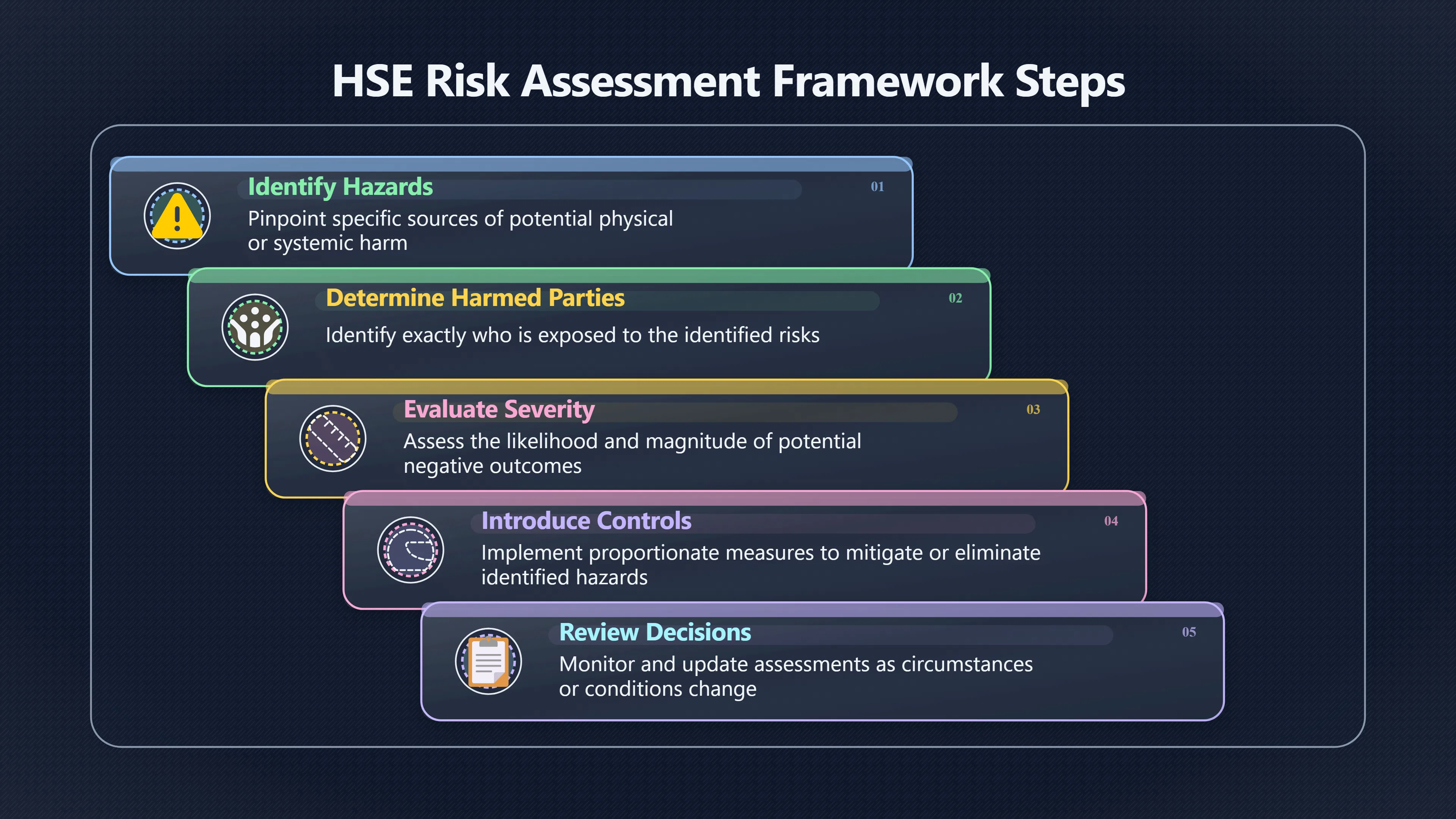
The HSE’s risk assessment framework asks organisations to:[youtube.com]youtube.comRisk Assessment 5 Steps | QUICKLY!Stakeholder Engagement in Risk Management Decisions | Exclusive Lesson…
- Identify hazards.
- Decide who might be harmed.
- Evaluate the likelihood and severity of harm.
- Introduce proportionate controls.
- Review decisions when circumstances change. HSE
Applied to everyday judgement, the same structure becomes:
Risk-control questionEveryday equivalentWhat could go wrong?What assumptions am I making?Who might be harmed?Who bears the downside besides me?How serious is the harm?Is inconvenience, financial loss, or lasting damage possible?What controls reduce risk?Can I test, phase, or limit the decision first?When should I review?How will I know if correction is needed?
Notice that none of these steps require certainty. They simply make hidden consequences visible before action.
Consultation Without Creating Gridlock
A common mistake is assuming that involving affected people means every decision must become a committee decision. Effective consultation is not unanimous agreement; it is improving information before commitment.
Consultation is most valuable when other people possess information that the decision-maker lacks, when they understand operational realities, or when they will experience the consequences directly.
A practical approach is to scale consultation with the stakes.
[Low shared risk](#endnote-5 “
Source snippet
Risk assessments must be shared with all staff and other people that may be affected by the risk.Read more")...
- Inform people.
- Invite brief feedback.
- Decide quickly.
[Moderate shared risk](#endnote-5 “
Source snippet
Risk assessments must be shared with all staff and other people that may be affected by the risk.Read more")...
- Consult those directly affected.
- Test assumptions.
- Adjust obvious problems before implementation.
[High shared risk](#endnote-5 “
Source snippet
Risk assessments must be shared with all staff and other people that may be affected by the risk.Read more")...
- Seek perspectives from multiple affected groups.
- Document important assumptions.
- Explore alternatives.
- Create monitoring and review points before irreversible commitment.
Health and safety guidance similarly distinguishes consultation from surrendering responsibility. Decision-makers remain accountable, but consulting affected people often produces better risk identification because those doing the work frequently understand practical hazards that senior leaders overlook. Digital Education Resource Archive
Practical Ways to Reduce Shared Risk
When a decision affects others, several techniques reduce potential harm without imposing excessive bureaucracy.
Start with reversible trials
If possible, introduce a pilot rather than a permanent change.
Examples include:
- running a new policy in one department;
- testing software with a small user group;
- introducing temporary scheduling changes before permanent adoption.
Reversible experiments generate information while limiting the number of people exposed if assumptions prove wrong.
Separate confidence from evidence
Decision-makers often mistake familiarity for safety.
A routine decision may deserve fresh scrutiny if:
- circumstances have changed;
- new groups are affected;
- the scale is much larger than before;
- previous success depended on conditions that no longer exist.
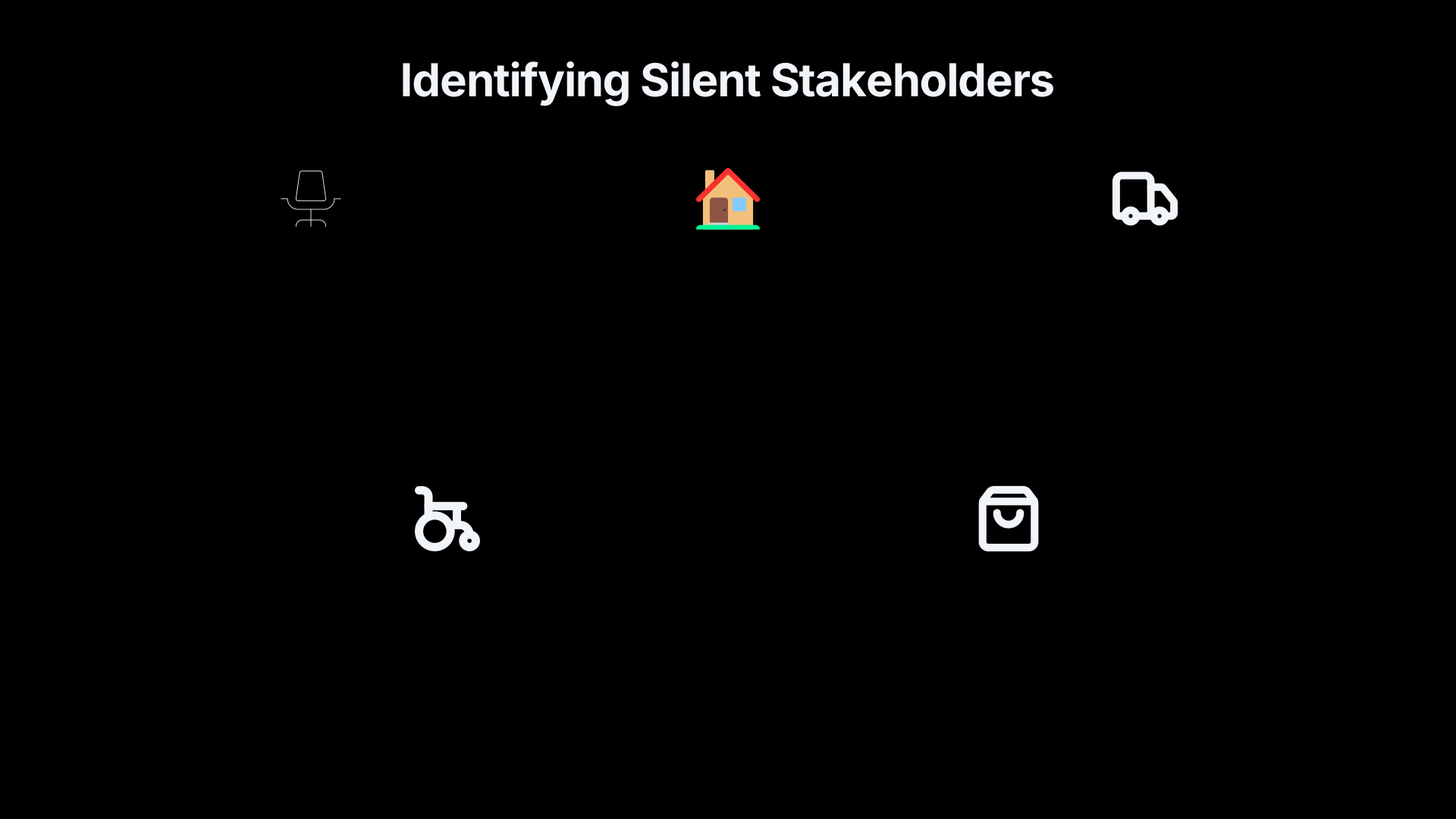
Look for silent stakeholders
People affected most are not always those represented in meetings.
Consider:
- future employees;
- customers;
- contractors;
- neighbours;
- vulnerable users;
- people with limited bargaining power.
Good governance asks not only who is speaking, but also whose interests are absent.
Ask who performs the recovery
When failures occur, someone usually pays for correction.
If the answer is “someone else”, the original decision deserves additional scrutiny because the costs have been shifted rather than eliminated.
Common Failure Modes
Several recurring thinking errors increase shared risk.
Assuming consent from silence. People may remain quiet because they lack authority, not because they agree.
Overweighting personal benefit. Decision-makers naturally notice advantages they receive more readily than costs imposed on others.
Treating routine decisions as harmless. Repeated small decisions can accumulate into substantial burdens for staff, customers or communities.
Ignoring unequal vulnerability. The same mistake affects different people differently. A minor inconvenience for one person may create major hardship for another.
Confusing speed with effectiveness. Faster decisions are valuable only when they do not create larger downstream costs through avoidable failures and rework.
A Simple Shared-Risk Check
Before committing to a decision that affects other people, ask:
- Who besides me experiences the downside?
- Can those people reasonably avoid the consequences?
- Have I consulted the people with the best information about practical risks?
- Can I reduce exposure through a pilot, phased rollout, or review point?
- If the decision fails, who performs the repair and who pays the cost?
These questions rarely require extensive analysis. Instead, they act as a proportional safeguard, ensuring that decisions involving shared consequences receive more care than decisions affecting only the decision-maker. By making affected parties visible early, they improve both judgement and fairness while avoiding unnecessary delay.
Amazon book picks
Further Reading
Books and field guides related to Who Pays If This Goes Wrong?. Use these as the next step if you want deeper reading beyond the article.
The Five Dysfunctions of a Team
Relevant where decisions affect groups and shared accountability.
eBay marketplace picks
Marketplace Samples
Example marketplace items related to this page. Use the search link to explore similar finds on eBay.




Endnotes
2.
Source: dera.ioe.ac.uk
Link:https://dera.ioe.ac.uk/id/eprint/39035/1/health%20and%20safety%20risk%20assessment%20-%20GOV.pdf
Source snippet
Digital Education Resource Archivehealth and safety risk assessment - GOV.UKMay 23, 2022 — 24 Feb 2022 — Involving them in making decisio...
Published: May 23, 2022
3.
Source: assets.publishing.service.gov.uk
Link:https://assets.publishing.service.gov.uk/media/6634988fcf3b5081b14f30cd/IQ8.10.J_Document_9_Health_and_Safety_Executive__Reducing_risks__protecting_people__HSE_s_decision-making_process__2001.pdf
Source snippet
risks, protecting people HSE's decision-making...We would like to emphasise that the document is aimed at explaining the decision-making...
4.
Source: foodstandards.gov.scot
Link:https://www.foodstandards.gov.scot/sites/default/files/migration/downloads/160809Information_Paper-_Risk_Assessment_use_to_aid_delivery_of_risk_management_and_policy_advice_with_Government.pdf
Source snippet
1 Information paper on risk assessment use to aid delivery...17 Aug 2016 — The paper indicates the different forms that risk assessment...
5.
Source: familyactionadultshandbook.trixonline.co.uk
Link:https://familyactionadultshandbook.trixonline.co.uk/chapter/assessing-and-monitoring-health-and-safety-risk
Source snippet
Risk assessments must be shared with all staff and other people that may be affected by the risk.Read more...
6.
Source: GOV.UK
Link:https://www.gov.uk/government/publications/covid-19-mitigation-of-risks-in-occupational-settings-with-a-focus-on-ethnic-minority-groups/mitigation-of-risks-of-covid-19-in-occupational-settings-with-a-focus-on-ethnic-minority-groups-consensus-statement-from-phe-hse-and-fom
Source snippet
of risks of COVID-19 in occupational settings...26 Mar 2021 — Through the cultural self-assessment process, staff are better able to see...
Additional References
7.
Source: britsafe.org
Link:https://www.britsafe.org/training-and-learning/informational-resources/risk-assessments-what-they-are-why-theyre-important-and-how-to-complete-them
Source snippet
British Safety CouncilRisk Assessment and Management: A Complete GuideThe definition of a risk assessment is a systematic process of iden...
8.
Source: youtube.com
Title: What Is the Principal-Agent Problem?
Link:https://www.youtube.com/watch?v=kd2r3ARB2tk
Source snippet
This video on Risk Assessment 5 Steps is directly relevant because it details the core framework of identifying exactly who is exposed to...
9.
Source: youtube.com
Title: Stakeholder Engagement in Risk Management Decisions | Exclusive Lesson
Link:https://www.youtube.com/watch?v=H4wGxoCP6VA
Source snippet
Mastering Risk Assessment: Strategic Decision Making for Success...
10.
Source: hsqeconsultancy.co.uk
Title: what is the hse definition of risk assessment
Link:https://hsqeconsultancy.co.uk/what-is-the-hse-definition-of-risk-assessment/
Source snippet
These steps include identifying hazards...Read more...
11.
Source: youtube.com
Title: Risk Assessment 5 Steps | QUICKLY!
Link:https://www.youtube.com/watch?v=b9dtWEN8VTs
Source snippet
Stakeholder Engagement in Risk Management Decisions | Exclusive Lesson...
12.
Source: youtube.com
Title: Mastering Risk Assessment: Strategic Decision Making for Success!
Link:https://www.youtube.com/watch?v=hQZXeftxB3Y
Source snippet
The 5 Steps To Risk Assessment...
13.
Source: youtube.com
Title: The 5 Steps To Risk Assessment
Link:https://www.youtube.com/watch?v=BzkhrD33YvI
Source snippet
What Is the Principal-Agent Problem?...
Topic Tree