Within Sharper Thinking
How Should You Judge Health Advice?
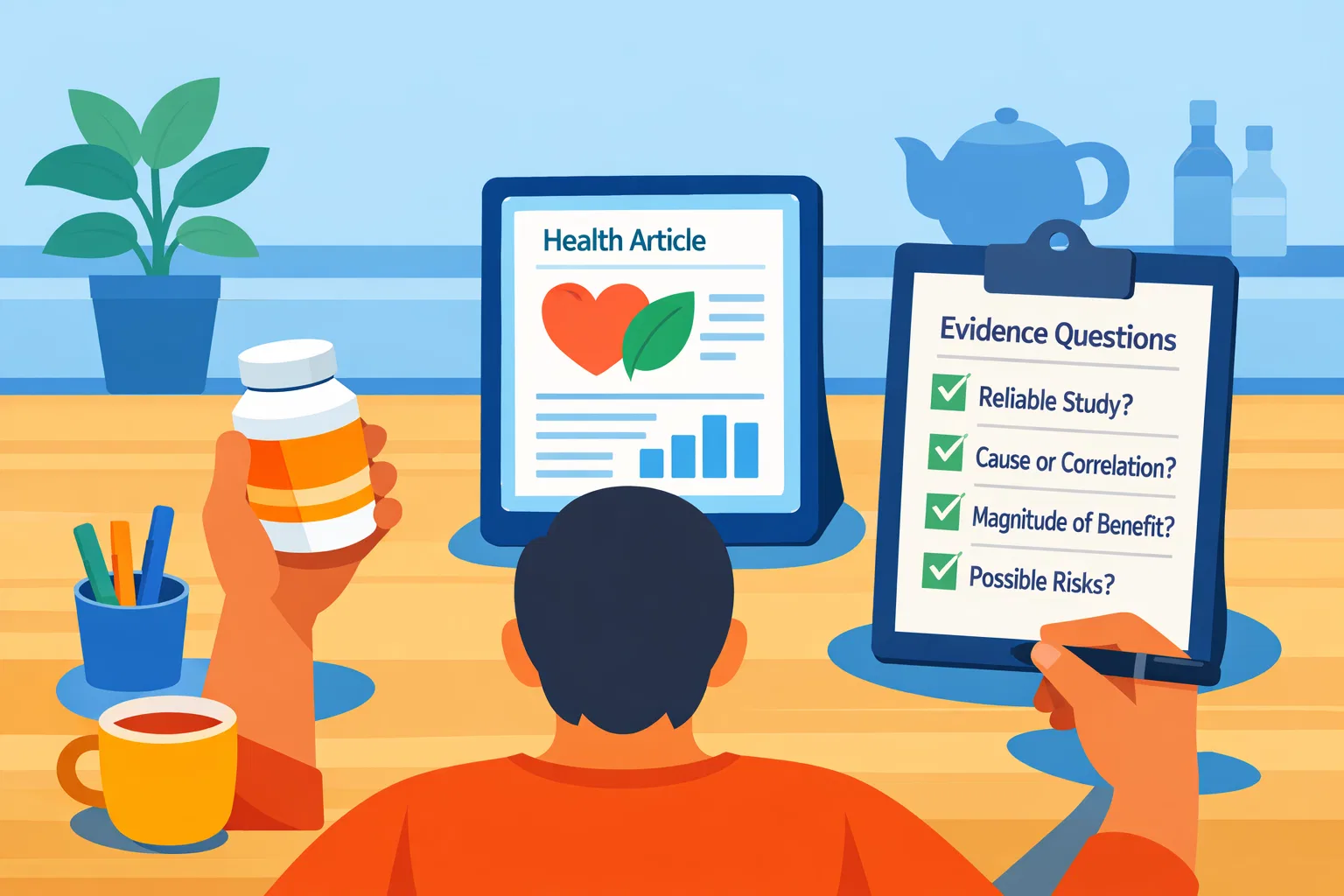
Health advice needs careful evidence checks because confident claims can mix real findings with overreach.
On this page
- Check the type of evidence
- Watch for causal overreach
- Separate advice from marketing
Page outline Jump by section
Introduction
Health advice is one of the hardest places to think clearly because the claims often sound both personal and scientific: a supplement “supports immunity”, a test “detects problems early”, a diet “cuts risk”, or a routine “balances hormones”. The right response is not blanket distrust. It is analytical scepticism: asking what kind of evidence supports the claim, whether the evidence shows causation rather than association, and whether the advice is being shaped by marketing as much as by health benefit. Health claims deserve this extra care because weak evidence, selective reporting, small effects, hidden harms, and commercial incentives can make a confident message look much stronger than it really is. Regulators and evidence organisations repeatedly stress the same point: claims about health benefits should be truthful, not misleading, and supported by appropriate scientific evidence, not just plausible stories, testimonials, or isolated studies.[Federal Trade Commission]ftc.govFederal Trade Commission Health Products Compliance GuidanceFederal Trade CommissionHealth Products Compliance GuidanceDecember 20, 2022 — 20 Dec 2022 — This document provides guidance from FTC sta…
This matters for everyday thinking because health decisions carry asymmetric risk. Being wrong about a film recommendation costs an evening; being wrong about a treatment, supplement, screening test, diet, or self-diagnosis can cost money, delay proper care, trigger anxiety, or cause direct harm. A good thinker therefore treats health advice as a claim to be checked in context: Who is the population? What outcome was measured? How large is the benefit in absolute terms? What harms were tracked? Who benefits if I believe this?
What kind of evidence is actually being offered?
A health claim becomes more credible when the evidence matches the strength of the promise. A story about one person feeling better can be a useful clue, but it cannot show that the product or habit caused the improvement. A laboratory study can suggest a biological mechanism, but it may not predict what happens in real people. An observational study can reveal patterns in populations, but people who choose one behaviour often differ from others in many ways. Randomised controlled trials are usually stronger for testing interventions because randomisation helps balance known and unknown differences between groups. Systematic reviews can be stronger still when they collect and appraise all relevant studies rather than relying on one convenient result. Cochrane notes that many of its reviews seek highly trustworthy evidence, typically from randomised trials, and its handbook emphasises assessing certainty, applicability, and numerical interpretation rather than treating all published findings as equal.[Cochrane]cochrane.orgOpen source on cochrane.org.
A practical evidence check starts with the verb in the claim. “Linked to”, “associated with”, “may support”, “helps maintain”, and “clinically proven to treat” are not equivalent. A claim that a food is associated with better heart health may come from population data. A claim that a pill prevents heart attacks should normally require direct trial evidence showing fewer heart attacks, not just a change in a blood marker. The stronger, more specific, and more medical the promise, the stronger the evidence should be.
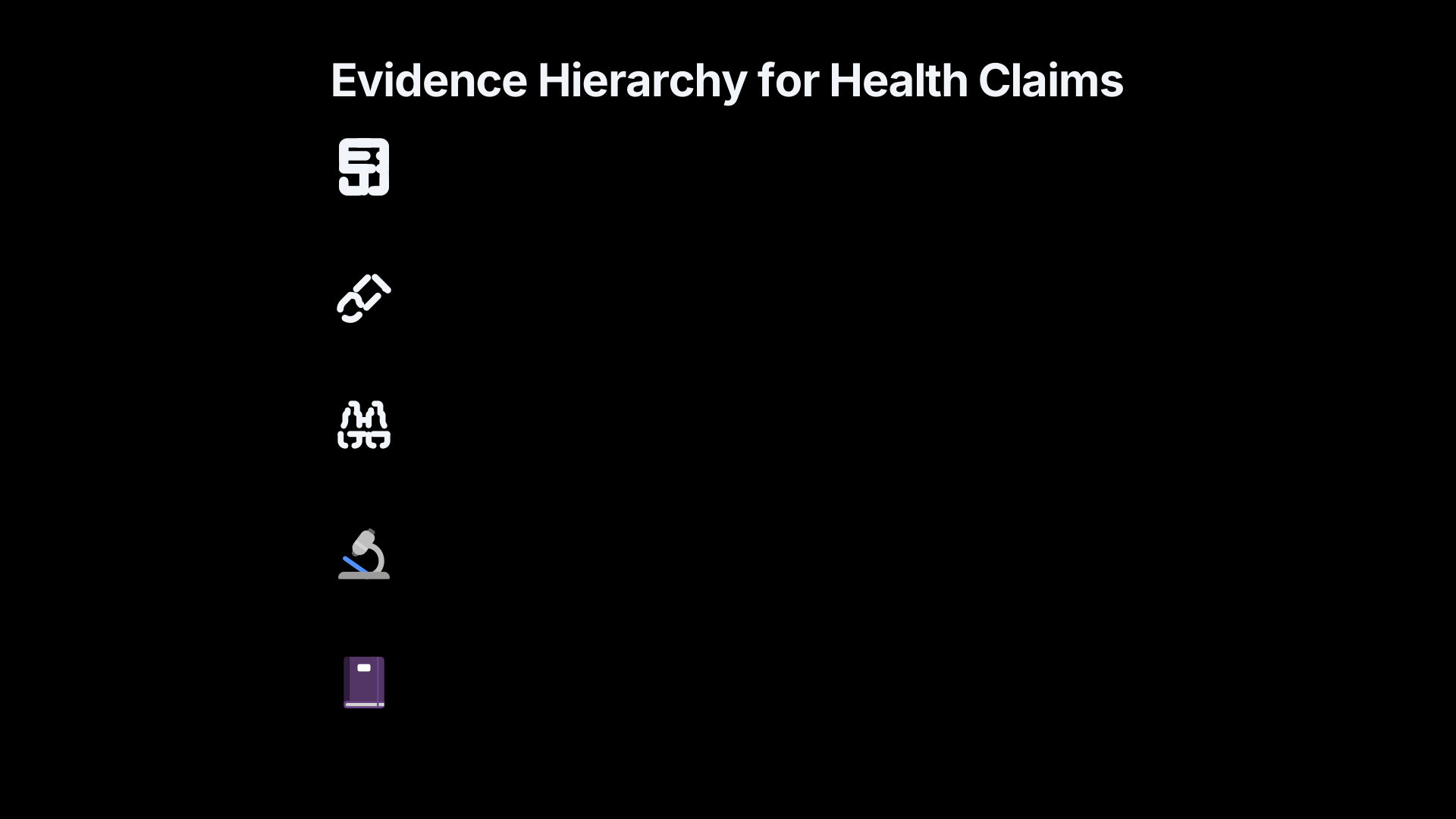
A useful hierarchy is not a rigid ladder, but it prevents a common mistake: giving a weak study the authority of a strong one. Case reports and testimonials can generate questions. Mechanistic studies can explain how something might work. Observational studies can identify patterns and possible risks. Randomised trials can test interventions more directly. Systematic reviews can show whether results hold across multiple studies. Even then, a review is only as good as the studies it includes, the outcomes it prioritises, and the honesty of its interpretation.
The first reader question should be: “Compared with what?” Many health claims quietly omit the comparison. A sleep supplement may improve sleep compared with doing nothing, placebo, a bedtime routine, reduced caffeine, cognitive behavioural therapy for insomnia, or prescription treatment; those are very different claims. Likewise, “natural” does not mean “safer than alternatives”. The US National Center for Complementary and Integrative Health advises considering safety for each complementary product or practice on its own, because risks depend on the specific therapy, dose, user, and context.[NCCIH]nccih.nih.govOpen source on nih.gov.
How weak evidence gets upgraded in everyday language
Health communication often turns cautious findings into stronger-sounding advice. A study may find a small association in one population; a headline becomes “X prevents disease”. A trial may measure a short-term biological marker; marketing becomes “supports long-term health”. A subgroup result may appear only after researchers divide the data many ways; advertising becomes “shown to work in adults like you”. This is where analytical skill matters: not rejecting the evidence, but refusing to let the language outrun it.
One common upgrade is moving from association to causation. If people who drink coffee have lower rates of a condition, coffee may be protective, but other explanations are possible: coffee drinkers may differ in income, occupation, smoking history, diet, sleep, access to healthcare, or baseline health. Modern causal-inference frameworks ask explicit questions before treating observational evidence as causal: what is the causal question, what target effect is being estimated, what assumptions are being made, and whether a causal interpretation is tenable.[JAMA Network]jamanetwork.comOpen source on jamanetwork.com.
Another upgrade is moving from surrogate outcomes to real-world benefit. A product might reduce inflammation markers, change cholesterol numbers, increase antibody levels, alter gut bacteria, or improve a score on a questionnaire. Those outcomes may matter, but they are not automatically the same as living longer, avoiding disease, feeling better, or functioning better. The issue is not that markers are useless; it is that a marker is a clue unless it has been validated as a reliable stand-in for the outcome people actually care about. Recent UK-linked work on cancer screening guidance, for example, stresses that surrogate outcomes cannot replace mortality as the definitive measure of whether a screening programme works.[University of Warwick]warwick.ac.ukwarwick researchers help shape national guidance for cancer screeningwarwick researchers help shape national guidance for cancer screening
A third upgrade is moving from relative risk to dramatic-sounding benefit. “Cuts risk by 50%” may sound huge, but it means different things if the baseline risk falls from 40 in 100 to 20 in 100, or from 2 in 10,000 to 1 in 10,000. Absolute risk reduction is often more useful for decisions because it tells you how many people are actually helped. Evidence-based medicine guides define absolute risk reduction as the difference in outcome rates between treatment and control groups, while relative risk describes a proportional comparison.[NCBI]ncbi.nlm.nih.govNCBIRelative risk, relative and absolute risk reductionNCBIRelative risk, relative and absolute risk reduction
A good rule is to translate every impressive health statistic into a plain comparison: “Out of 1,000 people like me, how many benefit, how many are harmed, and over what period?” If the answer is not available, the claim may still be interesting, but it should not be treated as settled advice.
Watch for causal overreach
Causal overreach happens when advice goes beyond what the evidence can support. It is especially common in nutrition, wellness, supplements, screening, and lifestyle optimisation because these areas mix real biological complexity with strong public demand for simple answers.
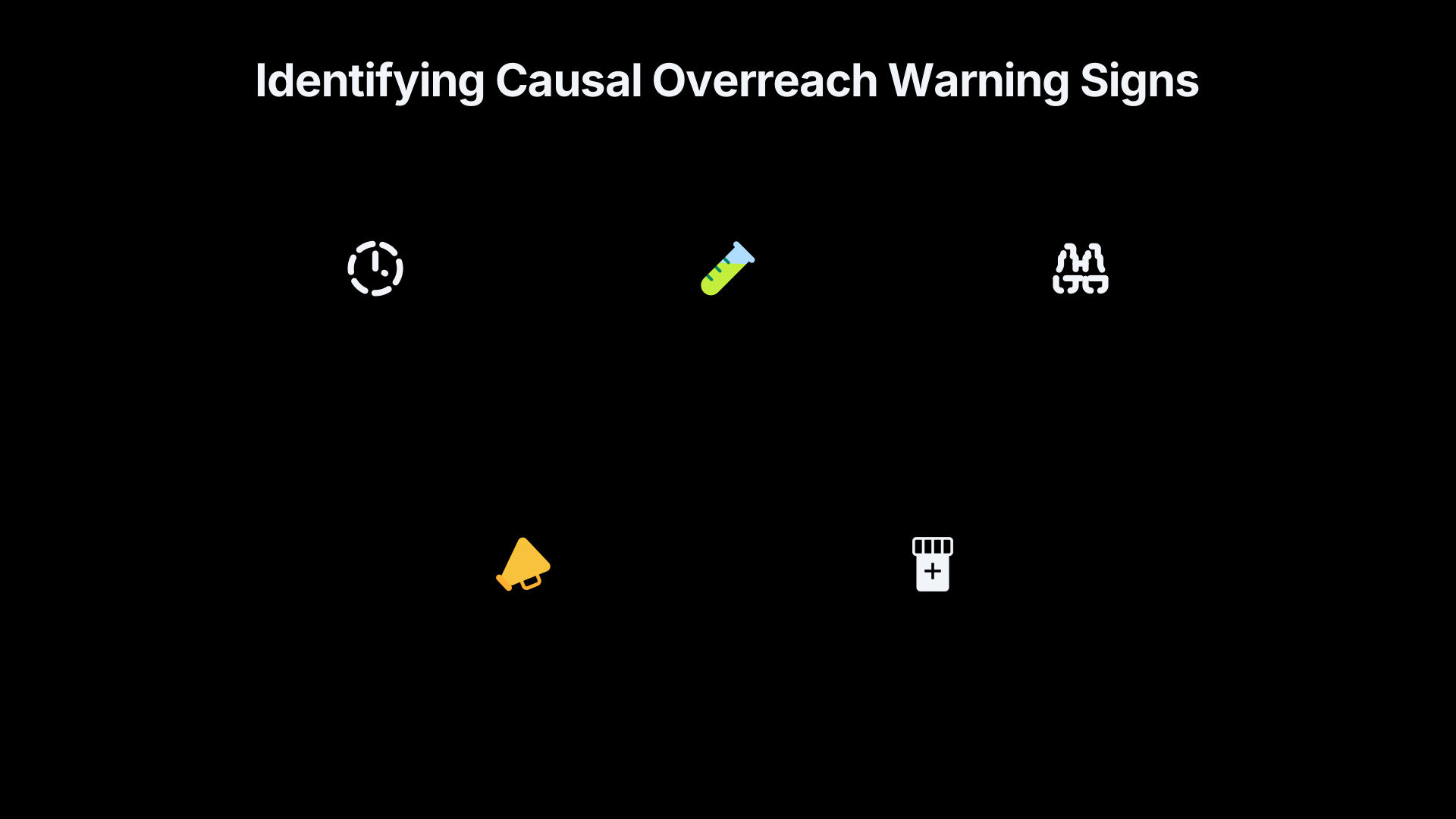
A claim is more likely to overreach when it has one or more warning signs:
- It relies mainly on before-and-after experience. Symptoms fluctuate, placebo effects are real, and people often try several changes at once.
- It uses observational evidence as if it were a trial. Population patterns can be valuable, but they are vulnerable to confounding.
- It treats a mechanism as proof of benefit. “Reduces oxidative stress in cells” does not automatically mean it prevents disease in people.
- It highlights one favourable outcome while ignoring harms. A treatment can improve one marker and worsen another.
- It generalises from a narrow group. A study in older adults with deficiency may not apply to healthy young adults.
- It claims broad effects across unrelated conditions. Products said to help energy, immunity, mood, metabolism, detoxification, inflammation, hormones, and ageing all at once deserve extra scrutiny.
The most careful question is not “Could this be true?” Many weak claims are biologically plausible. The better question is: “What evidence would distinguish this explanation from coincidence, bias, placebo response, regression to the mean, or selective reporting?” Medical research itself has recognised these problems for decades. John Ioannidis’s influential PLOS Medicine paper argued that published research findings are less likely to be true when studies are small, effect sizes are small, tested relationships are numerous, analysis choices are flexible, or financial and other interests are present. The precise scale of the problem is debated, but the warning is highly relevant to consumer health claims: early positive findings should be treated as provisional until they are replicated and put in context.[PLOS]journals.plos.orgOpen source on plos.org.
Causal overreach also appears when advice ignores the population context. “Vitamin D helps bone health” is not the same claim as “everyone should take high-dose vitamin D”. “A medicine works for people with diagnosed disease” is not the same as “healthy people should take it preventively”. “A supplement helps people with a deficiency” is not the same as “more is better”. The population, baseline risk, dose, outcome, and duration are not technical details; they determine whether the claim means anything useful.
The supplement case: where marketing and evidence collide
Dietary supplements are a useful test case because they sit at the boundary between nutrition, medicine, personal experimentation, and commerce. Some supplements are clearly useful in specific contexts, such as correcting a diagnosed deficiency or meeting pregnancy-related nutrient needs. The problem is not that supplements are always useless. The problem is that supplement marketing often presents broad health benefits in ways that exceed the available evidence, while consumers may assume a level of pre-market review that does not exist.
In the United States, the FDA explains that dietary supplement structure/function claims may describe a nutrient’s role in the body, but they must carry a disclaimer stating that the FDA has not evaluated the claim and that the product is not intended to diagnose, treat, cure, or prevent disease. The FDA also requires firms making certain structure/function claims in supplement labelling to notify the agency within 30 days after first marketing the product.[U.S. Food and Drug Administration]fda.govU.S. Food and Drug Administration Structure/Function ClaimsU.S. Food and Drug Administration Structure/Function Claims
That distinction creates a thinking trap. “Supports immune health” sounds medical to many readers, but it is not the same as “prevents influenza”, “treats infection”, or “reduces hospitalisation”. A company may carefully choose wording that sounds beneficial while avoiding a legally forbidden disease-treatment claim. The analytical move is to convert the marketing phrase into a testable question: “In which people, at what dose, compared with what, did this reduce which meaningful outcome?”
The safety side matters too. The FDA’s Health Fraud Product Database includes unapproved products subject to health-fraud-related violations, including products marketed with disease claims and products involving undeclared ingredients.[U.S. Food and Drug Administration]fda.govOpen source on fda.gov. A JAMA Network Open analysis of FDA warnings from 2007 to 2016 found 776 adulterated dietary supplements, including products containing unapproved pharmaceutical ingredients; less than half were associated with voluntary recalls.[PMC]pmc.ncbi.nlm.nih.govOpen source on nih.gov. NCCIH also warns that supplements marketed for rapid weight loss, bodybuilding, and sexual enhancement can be ineffective, unsafe, or adulterated, and notes that several weight-loss supplement categories have not been shown to be effective for long-term weight control.[NCCIH]nccih.nih.govOpen source on nih.gov.
For a reader, the lesson is not “never take supplements”. It is “do not evaluate supplements as if they were harmless foods when they are making drug-like promises”. Check whether the product has evidence in people like you, whether the dose matches the study, whether harms and interactions were assessed, whether an independent body has tested quality, and whether a clinician should be involved because of pregnancy, chronic illness, medication use, surgery, or symptoms that need diagnosis.
Separate advice from marketing
Marketing does not always lie. The subtler problem is that marketing selects, frames, and simplifies. A technically true claim can still mislead if it omits baseline risk, hides uncertainty, relies on tiny studies, uses testimonials to imply typical results, or blurs the line between wellbeing and disease treatment. The US Federal Trade Commission’s health-products guidance says claims about health-related products should be truthful, not misleading, and supported by science; it also explains that the same legal principles apply beyond dietary supplements to foods, over-the-counter drugs, homeopathic products, health equipment, diagnostic tests, and health-related apps.[Federal Trade Commission]ftc.govFederal Trade Commission Health Products Compliance GuidanceFederal Trade CommissionHealth Products Compliance GuidanceDecember 20, 2022 — 20 Dec 2022 — This document provides guidance from FTC sta…
A particularly important marketing move is the testimonial. “It worked for me” is emotionally powerful because it is concrete. But testimonials cannot tell you how many people tried the product and did not improve, whether the person improved for another reason, whether the result was typical, or whether harms occurred. The FTC warns that advertisers should not use consumer testimonials or expert endorsements to make claims that would be deceptive or unsupported if the advertiser made them directly.[DLA Piper]dlapiper.comOpen source on dlapiper.com.
Another marketing move is the appeal to being “natural”, “traditional”, “clean”, or “chemical-free”. These words often function as trust cues rather than evidence. Natural substances can be beneficial, neutral, contaminated, incorrectly dosed, or dangerous. Traditional use can justify studying an intervention, but it does not replace evidence about effectiveness, safety, interactions, and quality control.
A third move is the authority blur: “doctor recommended”, “clinically tested”, “science-backed”, “patented”, or “used in hospitals”. These phrases vary widely in meaning. “Clinically tested” may mean tested in a small uncontrolled study, tested only for safety, tested on one ingredient rather than the final product, or tested for a surrogate outcome. “Doctor recommended” may refer to a survey, a paid spokesperson, or a narrow use case. The critical question is always: “What exact claim was tested, and what did the test show?”
A practical test for judging health advice
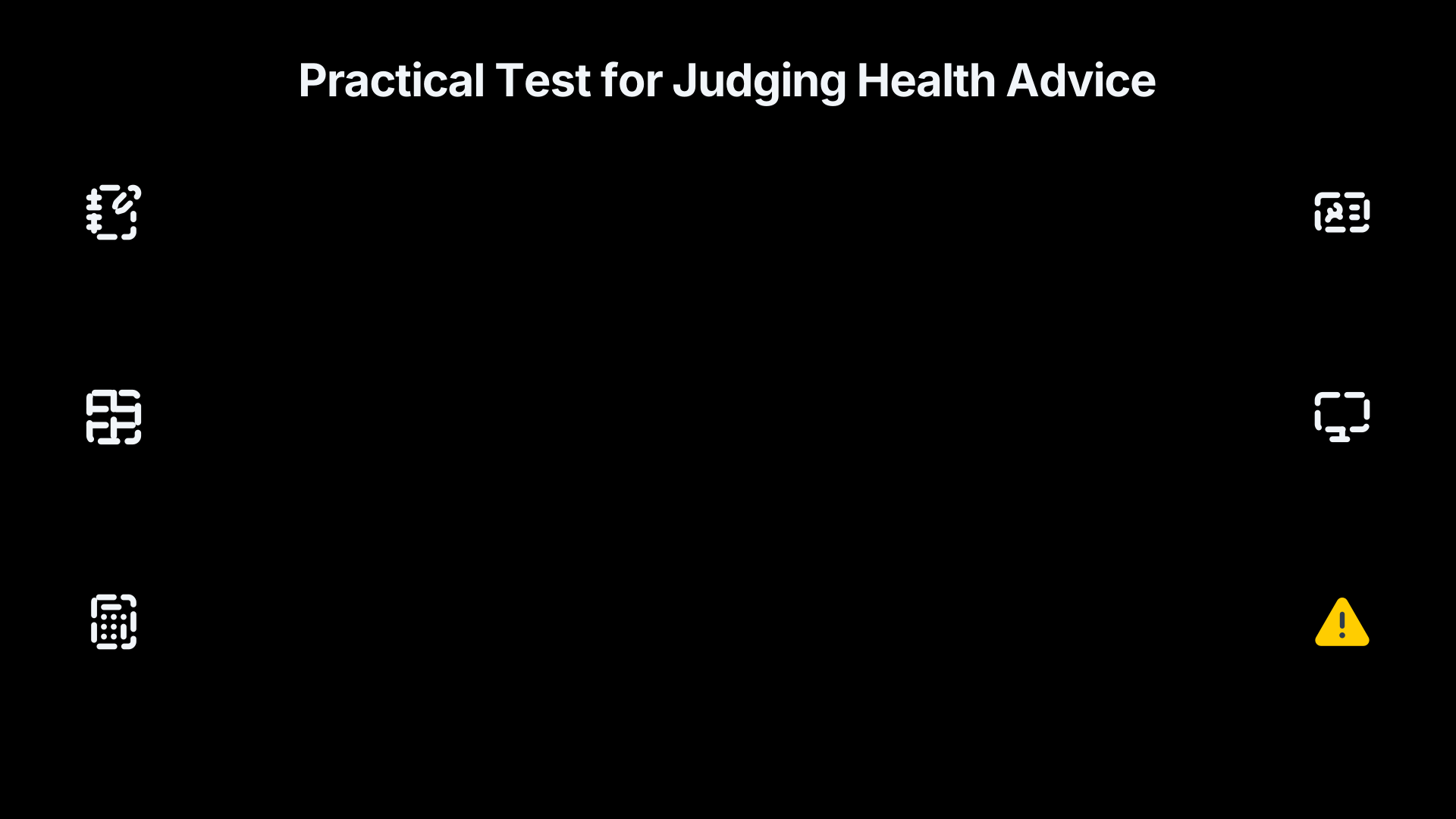
Good scepticism should make decisions clearer, not make every issue feel impossible. A practical approach is to slow down and run the claim through a few checks.
1. Define the exact claim
Turn the advice into a sentence precise enough to test: “For adults with mild insomnia, this dose of this product improves sleep duration compared with placebo over four weeks.” That is more useful than “supports sleep”. If the claim cannot be stated clearly, it cannot be checked clearly.
2. Identify the population
Ask whether the evidence applies to people like you. Age, sex, pregnancy, baseline deficiency, disease status, medication use, fitness level, and risk category can all change the balance of benefit and harm. Evidence in a deficient population may not apply to people with normal levels; evidence in high-risk patients may not justify routine use by low-risk people.
3. Look for the comparison group
Health claims without a comparison group are weak. Did researchers compare the intervention with placebo, usual care, another treatment, lifestyle advice, no intervention, or historical averages? Without a fair comparison, improvement can be mistaken for effect.
4. Check the outcome
Prefer outcomes that matter to patients: fewer fractures, fewer infections, less pain, better function, reduced mortality, fewer hospital admissions, or improved quality of life. Be cautious when the main evidence is a laboratory value, biomarker, imaging change, app score, or short-term proxy.
5. Translate the size of benefit
Ask for absolute numbers. “Reduced risk by 30%” is incomplete until you know the starting risk. A small absolute benefit may still be worthwhile for a safe, cheap intervention; it may not justify high cost, side effects, anxiety, or replacing proven care.
6. Ask what harms were measured
The absence of reported harms is not the same as evidence of safety. Trials may be too small or too short to detect uncommon harms. CONSORT Harms guidance stresses that randomised trials should report benefits and harms, because incomplete harms reporting weakens judgement about interventions.[PubMed]pubmed.ncbi.nlm.nih.govOpen source on nih.gov.
7. Follow the money and incentives
Commercial funding, affiliate links, paid endorsements, product sales, clinic packages, subscription testing, and influencer codes do not automatically make a claim false. They do mean the evidence should be inspected more carefully. The stronger the financial incentive, the less you should rely on the seller’s summary of the science.
When “more information” becomes too much medicine
Analytical scepticism also applies to tests, screening, and early detection. More information feels safer, but health information can harm when it produces false positives, overdiagnosis, unnecessary treatment, or anxiety without improving outcomes. The Choosing Wisely campaign was created to encourage conversations between clinicians and patients about which tests, treatments, and procedures are needed and which are not.[choosingwisely.org]choosingwisely.orgOpen source on choosingwisely.org. The BMJ’s Too Much Medicine initiative similarly highlights harms from overdiagnosis and unnecessary care, including waste and treatment of conditions that may never have caused symptoms or harm.[NDPH]ndph.ox.ac.ukOpen source on ox.ac.uk.
This is especially important for direct-to-consumer tests and wellness screening. A test can be analytically accurate yet still unhelpful if it is used in the wrong population, has unclear follow-up, detects abnormalities that do not need treatment, or produces results that users cannot interpret. The analytical question is not just “Can this test detect something?” but “Does using this test improve meaningful outcomes compared with not using it, and what harms follow from false alarms or incidental findings?”
The same applies to prevention advice. Preventive care can be hugely valuable, but the slogan “catch it early” is not enough. A screening programme needs evidence that earlier detection leads to better outcomes overall, not merely that it finds more abnormalities. It also needs to account for false positives, false negatives, overdiagnosis, invasive follow-up tests, treatment side effects, and psychological impact.
For everyday thinking, this means resisting the idea that health vigilance is always rational. Sometimes it is. Sometimes it becomes a market for worry. A good question is: “What decision will this information change, and is that decision supported by evidence?”
What good scepticism is not
Health scepticism can go wrong in two opposite directions. The first is gullibility: accepting confident claims because they sound scientific, natural, urgent, or personally appealing. The second is cynicism: assuming mainstream evidence is always corrupt, changing advice proves incompetence, or uncertainty means nobody knows anything. Both are poor analytical habits.
Good scepticism is calibrated. It gives more confidence to claims supported by well-conducted trials, replicated findings, transparent methods, plausible mechanisms, meaningful outcomes, and independent review. It gives less confidence to claims based on anecdotes, vague mechanisms, small uncontrolled studies, seller summaries, or outcomes chosen after the fact. It also accepts that evidence can change without implying that evidence is worthless.
A useful thinker can hold several ideas at once: medicine has produced enormous benefits; medical evidence can be biased or incomplete; some low-cost lifestyle changes are sensible even before perfect evidence exists; some popular wellness claims are exaggerated; some patients have symptoms that deserve serious investigation; and some tests or treatments create more harm than benefit. The skill is not choosing one tribe. It is matching confidence to evidence.
A reader’s rule of thumb
The safest compact rule is: the more a health claim asks you to spend, ingest, stop treatment, self-diagnose, fear a hidden problem, or expect a major outcome, the stronger the evidence should be. Small, low-risk habits may justify a lower evidence threshold. Expensive products, high-dose supplements, disease claims, screening tests, or advice that replaces proven care require much more.
Analytical scepticism makes health advice less dazzling but more useful. It slows the leap from “interesting finding” to “personal action”. It asks whether the study design fits the claim, whether the benefit is causal and meaningful, whether harms are known, whether the population matches, and whether marketing is doing work that evidence has not earned. That habit does not guarantee perfect decisions, but it protects against one of the most common failures in health thinking: mistaking confidence for proof.
Amazon book picks
Further Reading
Books and field guides related to How Should You Judge Health Advice?. Use these as the next step if you want deeper reading beyond the article.
Bad Science
Directly teaches readers how to evaluate weak health claims, media hype, trials, and marketing.
Do You Believe in Magic?
Shows how plausible-sounding health promises can outrun evidence and cause harm.
Overdiagnosed
Explains false alarms, overdiagnosis, and why more healthcare is not always better health.
Testing Treatments
Explains fair tests of treatments, uncertainty, harms, benefits, and patient-important evidence.
eBay marketplace picks
Marketplace Samples
Example marketplace items related to this page. Use the search link to explore similar finds on eBay.

Endnotes
1.
Source: ftc.gov
Title: Federal Trade Commission Health Products Compliance Guidance
Link:https://www.ftc.gov/business-guidance/resources/health-products-compliance-guidance
Source snippet
Federal Trade CommissionHealth Products Compliance GuidanceDecember 20, 2022 — 20 Dec 2022 — This document provides guidance from FTC sta...
Published: December 20, 2022
2.
Source: cochrane.org
Link:https://www.cochrane.org/authors/handbooks-and-manuals/handbook/current/chapter-24
3.
Source: cochrane.org
Link:https://www.cochrane.org/authors/handbooks-and-manuals/handbook/current/chapter-15
4.
Source: nccih.nih.gov
Link:https://www.nccih.nih.gov/health/safety
5.
Source: ncbi.nlm.nih.gov
Title: NCBIRelative risk, relative and absolute risk reduction
Link:https://www.ncbi.nlm.nih.gov/books/NBK63647/
6.
Source: journals.plos.org
Link:https://journals.plos.org/plosmedicine/article?id=10.1371%2Fjournal.pmed.0020124
7.
Source: fda.gov
Title: U.S. Food and Drug Administration Structure/Function Claims
Link:https://www.fda.gov/food/nutrition-food-labeling-and-critical-foods/structurefunction-claims
8.
Source: fda.gov
Title: notifications structurefunction and related claims dietary supplement labeling
Link:https://www.fda.gov/food/information-industry-dietary-supplements/notifications-structurefunction-and-related-claims-dietary-supplement-labeling
9.
Source: fda.gov
Link:https://www.fda.gov/consumers/health-fraud-scams/health-fraud-product-database
10.
Source: pmc.ncbi.nlm.nih.gov
Link:https://pmc.ncbi.nlm.nih.gov/articles/PMC6324457/
11.
Source: nccih.nih.gov
Link:https://www.nccih.nih.gov/health/providers/digest/dietary-supplements-marketed-for-weight-loss-bodybuilding-and-sexual-enhancement
12.
Source: choosingwisely.org
Link:https://www.choosingwisely.org/
13.
Source: ndph.ox.ac.uk
Link:https://www.ndph.ox.ac.uk/files/forms/too-much-medicine-_-the-bmj.pdf/%40%40download
14.
Source: journals.plos.org
Link:https://journals.plos.org/plosmedicine/article/file?id=10.1371%2Fjournal.pmed.0020124&type=printable
15.
Source: fda.gov
Link:https://www.fda.gov/
16.
Source: fda.gov
Title: Public Notifications
Link:https://www.fda.gov/consumers/health-fraud-scams/public-notifications-health-fraud
17.
Source: fda.gov
Title: medication health fraud notifications
Link:https://www.fda.gov/drugs/medication-health-fraud/medication-health-fraud-notifications
18.
Source: fda.gov
Link:https://www.fda.gov/consumers/health-fraud-scams
19.
Source: fda.gov
Title: fraudulent products
Link:https://www.fda.gov/drugs/medication-health-fraud/fraudulent-products
20.
Source: cochrane.org
Link:https://www.cochrane.org/
21.
Source: cochrane.org
Link:https://www.cochrane.org/authors/handbooks-and-manuals/handbook/current/chapter-25
22.
Source: cochrane.org
Link:https://www.cochrane.org/evidence/MR000034_how-similar-are-estimates-treatment-effectiveness-derived-randomised-controlled-trials-and
23.
Source: cochrane.org
Link:https://www.cochrane.org/learn/courses-and-resources/cochrane-methodology/network-meta-analysis-nma/combining-randomised-and-non-randomised-evidence-network-meta-analysis
24.
Source: bmj.com
Title: bmj 2024 081123
Link:https://www.bmj.com/content/389/bmj-2024-081123
25.
Source: jamanetwork.com
Link:https://jamanetwork.com/journals/jama/fullarticle/2818746
26.
Source: warwick.ac.uk
Title: warwick researchers help shape national guidance for cancer screening
Link:https://warwick.ac.uk/news/pressreleases/warwick-researchers-help-shape-national-guidance-for-cancer-screening/
27.
Source: dlapiper.com
Link:https://www.dlapiper.com/en/insights/publications/2023/01/ftcs-expansive-new-advertising-compliance-guidance-covers-marketing-of-any-health-related-product
28.
Source: pubmed.ncbi.nlm.nih.gov
Link:https://pubmed.ncbi.nlm.nih.gov/37100738/
29.
Source: nccih.nih.gov
Link:https://www.nccih.nih.gov/grants/nutritional-interventions-and-natural-products-research-information-for-researchers
30.
Source: pmc.ncbi.nlm.nih.gov
Link:https://pmc.ncbi.nlm.nih.gov/articles/PMC12064251/
31.
Source: nccih.nih.gov
Title: using dietary supplements wisely
Link:https://www.nccih.nih.gov/health/using-dietary-supplements-wisely
32.
Source: nccih.nih.gov
Title: diabetes and dietary supplements what you need to know
Link:https://www.nccih.nih.gov/health/diabetes-and-dietary-supplements-what-you-need-to-know
33.
Source: ncbi.nlm.nih.gov
Link:https://www.ncbi.nlm.nih.gov/sites/books/NBK154456/
34.
Source: nccih.nih.gov
Title: approach dietary supplements with caution
Link:https://www.nccih.nih.gov/research/blog/approach-dietary-supplements-with-caution
35.
Source: pmc.ncbi.nlm.nih.gov
Link:https://pmc.ncbi.nlm.nih.gov/articles/PMC5118066/
36.
Source: nccih.nih.gov
Title: are you considering a complementary health approach
Link:https://www.nccih.nih.gov/health/are-you-considering-a-complementary-health-approach
37.
Source: ods.od.nih.gov
Title: WYNTK Consumer
Link:https://ods.od.nih.gov/factsheets/WYNTK-Consumer/
38.
Source: pmc.ncbi.nlm.nih.gov
Link:https://pmc.ncbi.nlm.nih.gov/articles/PMC10195435/
39.
Source: nccih.nih.gov
Title: type 2 diabetes and dietary supplements science
Link:https://www.nccih.nih.gov/health/providers/digest/type-2-diabetes-and-dietary-supplements-science
40.
Source: ncbi.nlm.nih.gov
Link:https://www.ncbi.nlm.nih.gov/books/NBK202085/
41.
Source: pubmed.ncbi.nlm.nih.gov
Link:https://pubmed.ncbi.nlm.nih.gov/21933455/
42.
Source: pmc.ncbi.nlm.nih.gov
Link:https://pmc.ncbi.nlm.nih.gov/articles/PMC4838699/
43.
Source: pmc.ncbi.nlm.nih.gov
Link:https://pmc.ncbi.nlm.nih.gov/articles/PMC8057918/
44.
Source: pmc.ncbi.nlm.nih.gov
Link:https://pmc.ncbi.nlm.nih.gov/articles/PMC6837247/
45.
Source: pmc.ncbi.nlm.nih.gov
Link:https://pmc.ncbi.nlm.nih.gov/articles/PMC12348139/
46.
Source: pmc.ncbi.nlm.nih.gov
Link:https://pmc.ncbi.nlm.nih.gov/articles/PMC1182327/
47.
Source: pmc.ncbi.nlm.nih.gov
Link:https://pmc.ncbi.nlm.nih.gov/articles/PMC1855693/
48.
Source: equator-network.org
Title: consort harms
Link:https://www.equator-network.org/reporting-guidelines/consort-harms/
49.
Source: cochranelibrary.com
Link:https://www.cochranelibrary.com/en/cdsr/doi/10.1002/14651858.MR000034.pub2/full/en
50.
Source: cochranelibrary.com
Link:https://www.cochranelibrary.com/cdsr/doi/10.1002/14651858.CD006776.pub2/abstract
51.
Source: researchgate.net
Link:https://www.researchgate.net/publication/343466371_NCCIH_Perspectives_on_Clinical_Research_Involving_Natural_Products
52.
Source: dash.harvard.edu
Link:https://dash.harvard.edu/bitstreams/7312037c-ae2f-6bd4-e053-0100007fdf3b/download
53.
Source: stat.cmu.edu
Link:https://www.stat.cmu.edu/~ryantibs/journalclub/ioannidis.pdf
54.
Source: GOV.UK
Link:https://www.gov.uk/government/publications/nutrition-and-health-claims-guidance-to-compliance-with-regulation-ec-1924-2006-on-nutrition-and-health-claims-made-on-foods/nutrition-and-health-claims-guidance-to-compliance-with-regulation-ec-19242006
55.
Source: youtube.com
Link:https://www.youtube.com/watch?v=Rtr7AmZ9WLQ
56.
Source: youtube.com
Title: Observational Studies
Link:https://www.youtube.com/watch?v=s6_fLHrkdoU
57.
Source: youtube.com
Link:https://www.youtube.com/watch?v=rbcOniLuLKw
58.
Source: jamanetwork.com
Link:https://jamanetwork.com/journals/jamanetworkopen/fullarticle/2706496
59.
Source: jamanetwork.com
Link:https://jamanetwork.com/journals/jama-health-forum/fullarticle/2793643
Additional References
60.
Source: efsa.europa.eu
Title: European Food Safety Authority Health claims | EFSA
Link:https://www.efsa.europa.eu/en/topics/topic/health-claims
Source snippet
European Food Safety AuthorityHealth claims | EFSA - European UnionOne of the key objectives of this Regulation is to ensure that any cla...
61.
Source: youtube.com
Link:https://www.youtube.com/watch?v=zaQszRJuSdo
Source snippet
ep 17 BAD CANCER ADVICE - Why Smart People Fall for Cancer Misinformation...
62.
Source: youtube.com
Title: The Health and Wellness Lie | Nick Tiller on Skeptical Inquirer Presents
Link:https://www.youtube.com/watch?v=nUHS0USoeZU
Source snippet
How to Spot Bad Science: The Truth About Scientific Papers (Critical Thinking #2)...
63.
Source: youtube.com
Title: ep 17 BAD CANCER ADVICE
Link:https://www.youtube.com/watch?v=2syEITnt5ec
Source snippet
How to Appraise a Clinical Trial (Randomized Controlled Trial) - Part 1...
64.
Source: researchgate.net
Link:https://www.researchgate.net/publication/308927020_Observational_Research_Rigor_Alone_Does_Not_Justify_Causal_Inference
65.
Source: researchgate.net
Link:https://www.researchgate.net/publication/7686290_Why_Most_Published_Research_Findings_Are_False
66.
Source: researchgate.net
Link:https://www.researchgate.net/publication/290598391_Approaches_by_the_US_National_Institutes_of_Health_to_support_rigorous_scientific_research_on_dietary_supplements_and_natural_products
67.
Source: medschool.lsuhsc.edu
Link:https://www.medschool.lsuhsc.edu/lungcancer/docs/Are_You_Considering%20a%20complementary%20health%20approach_national%20center%20for%20complementary%20and%20integrative%20health_handouts.pdf
68.
Source: aomrc.org.uk
Link:https://www.aomrc.org.uk/projects-and-programmes/choosing-wisely/
69.
Source: choosingwiselycanada.org
Link:https://choosingwiselycanada.org/wp-content/uploads/2019/01/CWC_Diving-into-Overuse-in-Hospitals.pdf
Topic Tree